* hoping with kay ryan

Crown – Kay Ryan

Too much rain
loosens trees.
In the hills giant oaks
fall upon their knees.
You can touch parts
you have no right to—
places only birds
should fly to.

* flight *

* flight *

As August comes to an end, I begin to reflect on the end of summer – or, rather, the ending of summer. Perhaps it takes being born in the summer to be sensitive to the days beginning to grow shorter, even by minutes. Or maybe that’s just a kind of idealistic hope of my own. My world’s been pretty rich this summer, good and bad. Through it all, I am happy to report hope keeps winning out, idealistic or otherwise.

Kay Ryan’s work has always struck me as full of a similar kind of hope. A kind of stubborn and willful hope played out in phrasing and what she terms “recombinant rhyme.” The poem above models this willfulness with grace; the poem below has a tone steeped in struggle. Enjoy!

A Certain Kind of Eden – Kay Ryan

It seems like you could, but
you can’t go back and pull
the roots and runners and replant.
It’s all too deep for that.
You’ve overprized intention,
have mistaken any bent you’re given
for control. You thought you chose
the bean and chose the soil.
You even thought you abandoned
one or two gardens. But those things
keep growing where we put them—
if we put them at all.
A certain kind of Eden holds us thrall.
Even the one vine that tendrils out alone
in time turns on its own impulse,
twisting back down its upward course
a strong and then a stronger rope,
the greenest saddest strongest
kind of hope.

***

Happy kinding!

José
a colorful lyrical alignment

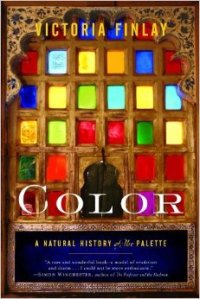
This week’s post features a lyrical alignment of an excerpt from Victoria Finlay’s book Color: A Natural History of the Palette. This is the kind of nonfiction book that tries to break down information through story and personal recollections. Finlay writes of her travels to the places where particular colors are made and goes into the details of their physical and historical make-up.

I read this book back in 2012 and still find myself citing several of its jewels of knowledge with people. One particular moment in the book lends itself to being read on its own like a poem. In the excerpt (lyrically aligned below), Finlay recounts one scientist’s metaphorical explanation of the color of the sky. Enjoy!

The Color of the Sky

a lyrical alignment 

“…to explain the color of the sky, [John Tyndall, nineteenth century British scientist] would use an image of the sea.” (from Color – Victoria Finlay)

Think of the ocean, he would say,
and think of the waves
crashing against the land.

If they came across
a huge cliff
then all the waves would stop;

if they met a rock
then only the smaller waves
would be affected;

while a pebble
would change the course
of only the tiniest waves

washing against the beach.
This is what happens
with light from the sun.

Going through the atmosphere
the biggest wave lengths –
the red ones –

are usually unaffected,
and it is only the smallest ones –
the blue and violet ones –

which are scattered by the tiny
pebble-like molecules
in the sky,

giving the human eye
the sensation of blue.
Tyndall thought

it was particles of dust
which did it;
Einstein later proved

that even molecules
of oxygen and hydrogen
are big enough to scatter

the blue rays
and leave the rest alone.

***

Happy scattering!

José