* Mary Oliver, William Blake & the friday influence

Blake Dying – Mary Oliver

He lay
with the pearl of his life under the pillow.

Space shone, cool and silvery,
in the empty cupboards

while he heard in the distance, he said,
the angels singing.

Now and again his white wrists
rose a little above the white sheet.

When death is about to happen
does the body grow heavier or lighter?

He felt himself growing heavier.
He felt himself growing lighter.

When a man says he hears angels singing,
he hears angels singing.

When a man says he hears angels singing,
he hears angels singing.
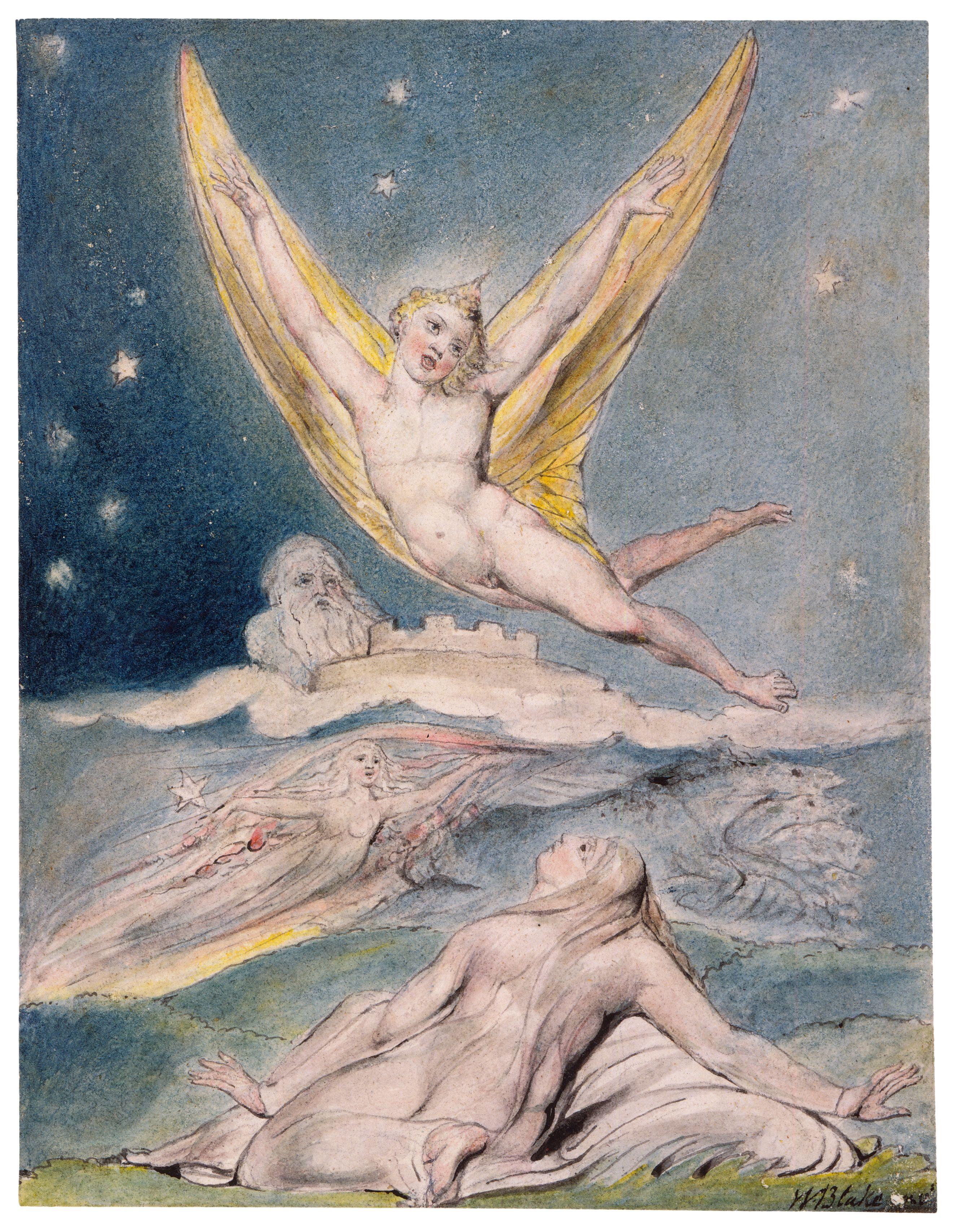
night startled by the lark - wiliam blake

night startled by the lark – wiliam blake

This week on the Influence: Mary Oliver!

I picked this poem up at work while shelving Mary Oliver’s latest book, A Thousand Mornings.  

The words stopped me as I shelved.  There is simplicity in this poem that is akin to still life painting – but a poet’s take on it.  A moment – a dying moment – as still life.

She conjures much with little.  From pearl to space to her choices in colors – all of it culminates into the hanging presence of Blake’s hearing angels singing. 

There’s not much to do once you get into this kind of moment in a poem but acknowledge it.

Blake’s relationship with the angels takes me back to being 18, sitting in Dana Levin’s Form and Theory class, her introducing a Blake poem, prefacing it by saying This guy saw angels in the trees!  

Being, again, 18, I was like – yes, of course, totally – eager to understand and see them too.

Seeing the angels in this poem is another lesson.  Oliver’s repetition in the last two couplets – their very emphasis on Blake’s words – drives home to me how all a poet can do is tell what they see, how they see it.  And all that’s needed to honor this seeing is to listen.

Happy listening!

Jose
* Donald Justice & the friday influence

The Assassination – Donald Justice

It begins again, the nocturnal pulse. 
It courses through the cables laid for it. 
It mounts to the chandeliers and beats there, hotly. 
We are too close. Too late, we would move back. 
We are involved with the surge. 

Now it bursts. Now it has been announced. 
Now it is being soaked up by newspapers. 
Now it is running through the streets. 
The crowd has it. The woman selling carnations 
And the man in the straw hat stand with it in their shoes. 

Here is the red marquee it sheltered under. 
Here is the ballroom, here 
The sadly various orchestra led 
By a single gesture. My arms open. 
It enters. Look, we are dancing.

(June 5, 1968)

***

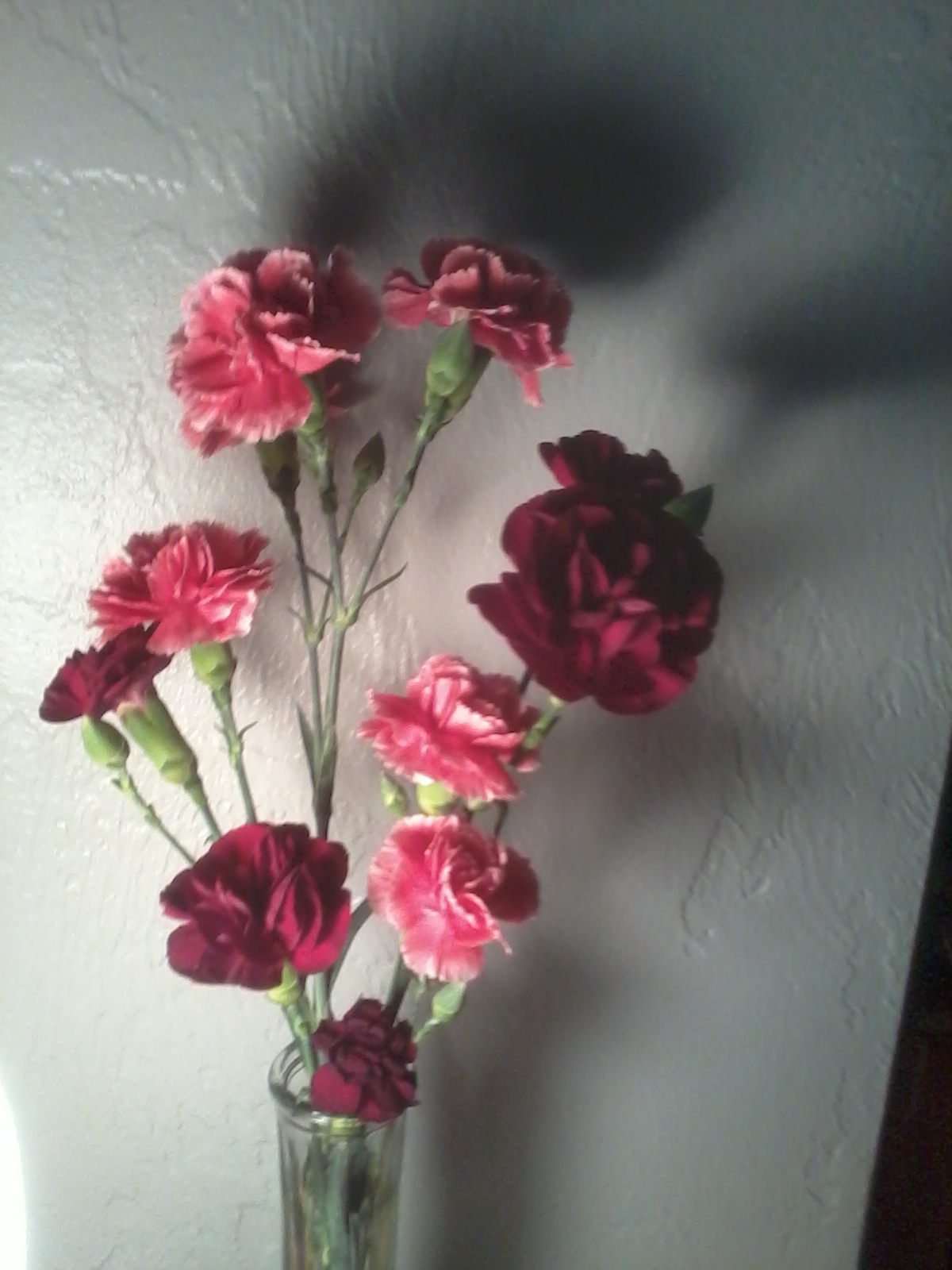
*carnations*

This week on the Influence: Donald Justice.

Picked up the poem above from reading through John Drury’s Poetry Dictionary.   The assassination in the poem is that of Robert Kennedy’s in 1968.

Drury places the poem in the chance poetry category.  In writing this poem, Justice wrote words on cards and picked them out at random as he wrote.

I sense some of the risk-taking of this practice in the “charged” words of the first stanza, and in the phrase “soaked up by newspapers” in the second.  It’s only a guess, but on my third reading of the poem, the phrase struck me as masterfully plucked from its context of what to do about a spill and given a new life in this poem.

I am moved by the menace and epic feel achieved in the indirect take on the subject.  Here you have a poem about a political misfortune that delves into the human aspect of it – how news travel into our lives.  I noted on each rereading of the poem how the word “it’ becomes sinister and carries the emotion of the poem to the end.  The end itself drives home a sense of mortality, of interrupted life.

On a lighter note: the carnations are brought to you courtesy of last week’s birthday celebration.

Bought them on the fly before dinner.

***

Also: I have two poems in Turn, an anthology of poems about seasons put out last month by Uttered Chaos Press.  Copies can be purchased on the Uttered Chaos website here OR on Amazon here.  Special thanks to UC editor Laura LeHew.

***

Happy uttering!

Jose