* throwing things on the floor with Jim Harrison & John Keats

In reading Jim Harrison’s novel The English Major last month, I came across the following and it brought tears – I have been much for tears these days – and mainly because I have been slowly going over poems I have memorized, seeing what stuck and what fell off, and was suddenly surprised to recognize the poem referenced below:

I was saddened by the idea that I might not finish the work before I died, a natural enough fear.  Keats wrote, “When I have fears that I may cease to be before my pen has glean’d my teeming brain…”  That was throwing the raw meat on the floor in a lovely way.

That phrasing throwing the raw meat on the floor – that’s it isn’t it – what it is a poet does no matter the how we use to do it.  We are not in the business of poetry if the raw meat isn’t on the floor.

Realizing I had let the poem slip after a few years, and then coming back to it, memorizing it again – more than an old friend, I felt like a piece of myself was returning, that something understood once was being reconciled in a big, new way.

There’s a lot of history in the poem too: Yeats borrowed the phrasing of high romance, and John Berryman references the end of the poem in the title of his book Love and Fame.  I myself am tempted to borrow and manipulate the phrasing for something called: The Fool-ripened Grain.

Here is the poem below – you can see for yourself how awful and sacrilegious my idea is.
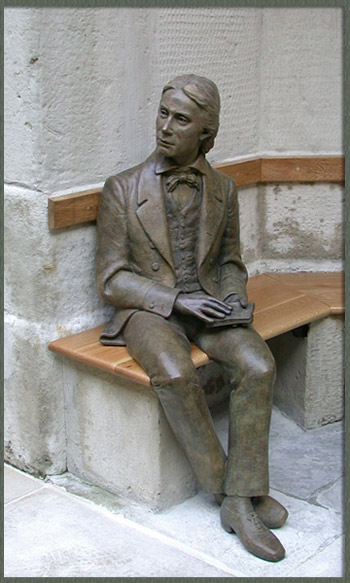
* you let the meat fall where? *

* you let the meat fall where? *

When I have fears that I may cease to be – John Keats

When I have fears that I may cease to  be
Before my pen has gleaned my teeming brain,
Before high-piled books in charactery
Hold like rich garners the full ripened grain;

When I behold, upon the night’s starred face,
Huge cloudy symbols of a high romance
And think that I may never live to trace
Their shadows with the magic hand of chance;

And when I feel, fair creature of an hour,
That I shall never look upon thee more,
Never have relish in the faery power
Of unreflecting love – then on the shore

Of the wide world I stand alone, and think
Til love and fame to nothingness do sink.

***

Happy sinking!

Jose
* learning to Howl with Allen Ginsberg

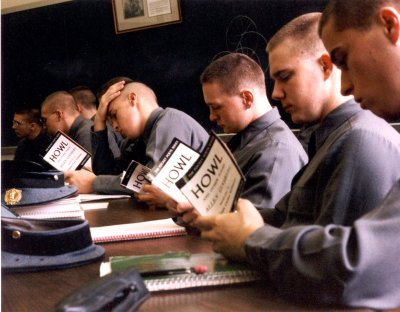
Had to read and discuss Allen Ginsberg’s Howl this week in one of my classes.  Kinda went like this:

* Angelheadedwhatnow? *

* From Howl to Huh? *

I have gone back and forth on the poem Howl since I first read it at eighteen.  I shared with my classmates how I went to San Diego on spring break once and spent five days straight following this routine: wake up, do tai chi, read Howl aloud.

All.  Three.  Parts.

I was young and weird, to say the least.

The whole time I did this I felt like I was throwing myself upon the poem and asking: why is this considered such a great poem?  what can I learn from it?  did Ginsberg really have as much peyote/sex as he says he did?

Borges said that Walt Whitman the man spent his writing life wanting to be more and more like the Walt Whitman in Leaves of Grass.  Both Ginsberg and Whitman were larger than life.

Both were also very diplomatic and American.  Our professor shared with us that, while in Spain, he would run into people who, though they knew nothing of American poetry, they knew Howl.

And that’s Ginsberg accomplishment.  Not everybody loves The Wasteland, but it is a mountain between Leaves of Grass and Howl (this is in keeping with American poetry being a mountain range which is something I realize now may only make sense in my head).

Howl is one of those poems that is in the blood of American poetry like it or not, it is that family member that crashes the party with great stories but bad breath.

I won’t excerpt Howl here – you gotta take that ride yourself, y’all – but instead will share a poem that has much of what I love about Ginsberg – the humor and the heart.

**

A Supermarket in California – Allen Ginsberg

What thoughts I have of you tonight, Walt Whitman, for
I walked down the sidestreets under the trees with a headache
self-conscious looking at the full moon.
In my hungry fatigue, and shopping for images, I went
into the neon fruit supermarket, dreaming of your enumerations!
What peaches and what penumbras! Whole families
shopping at night! Aisles full of husbands! Wives in the
avocados, babies in the tomatoes!–and you, Garcia Lorca, what
were you doing down by the watermelons?

I saw you, Walt Whitman, childless, lonely old grubber,
poking among the meats in the refrigerator and eyeing the grocery
boys.
I heard you asking questions of each: Who killed the
pork chops? What price bananas? Are you my Angel?
I wandered in and out of the brilliant stacks of cans
following you, and followed in my imagination by the store
detective.
We strode down the open corridors together in our
solitary fancy tasting artichokes, possessing every frozen
delicacy, and never passing the cashier.

Where are we going, Walt Whitman? The doors close in
an hour. Which way does your beard point tonight?
(I touch your book and dream of our odyssey in the
supermarket and feel absurd.)
Will we walk all night through solitary streets? The
trees add shade to shade, lights out in the houses, we’ll both be
lonely.

Will we stroll dreaming of the lost America of love
past blue automobiles in driveways, home to our silent cottage?
Ah, dear father, graybeard, lonely old courage-teacher,
what America did you have when Charon quit poling his ferry and
you got out on a smoking bank and stood watching the boat
disappear on the black waters of Lethe?

Berkeley, 1955

***

Happy disappearing!

Jose