* arriving with Denise Levertov

Overland to the Islands – Denise Levertov

Let’s go — much as that dog goes,
intently haphazard.  The
Mexican light on a day that
“smells like autumn in Connecticut”
makes iris ripples on his
black gleaming fur — and that too
is as one would desire — a radiance
consorting with the dance.
Under his feet
rock and mud, his imagination, sniffing,
engaged in its perceptions — dancing
edgeways, there’s nothing
the dog disdains on his way,
nevertheless he
keeps moving, changing
pace and approach but
not direction — “every step an arrival.”
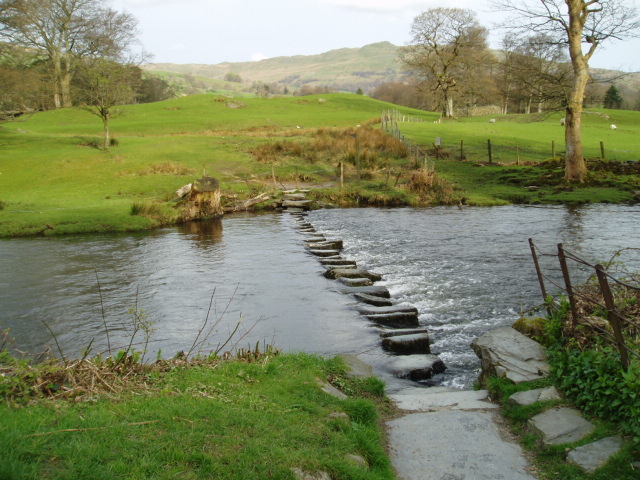
*arrivearrivearrive*

*arrivearrivearrive*

Our professor snuck in this poem at the tail end of Levertov’s essay “Some Notes on Organic Form” – a good read for you poets if you have the time.

Much of what moves me here in this particular poem – the juxtaposition of senses and sensibility, how the poem insists on perception after perception, leads from word to word in an engaging manner – is discussed in that essay in terms of meditation and breath.

I have been much involved in another kind of meditation and breath, one that centers me after teaching.  Here’s a quote that has followed me into my inner space the past two days:

All the world is a dream, not because it isn’t there, but because we each attach different meanings to it.

— Ming-Dao Deng, 365 Tao

Happy attaching!

Jose
* David Ignatow in My Own House

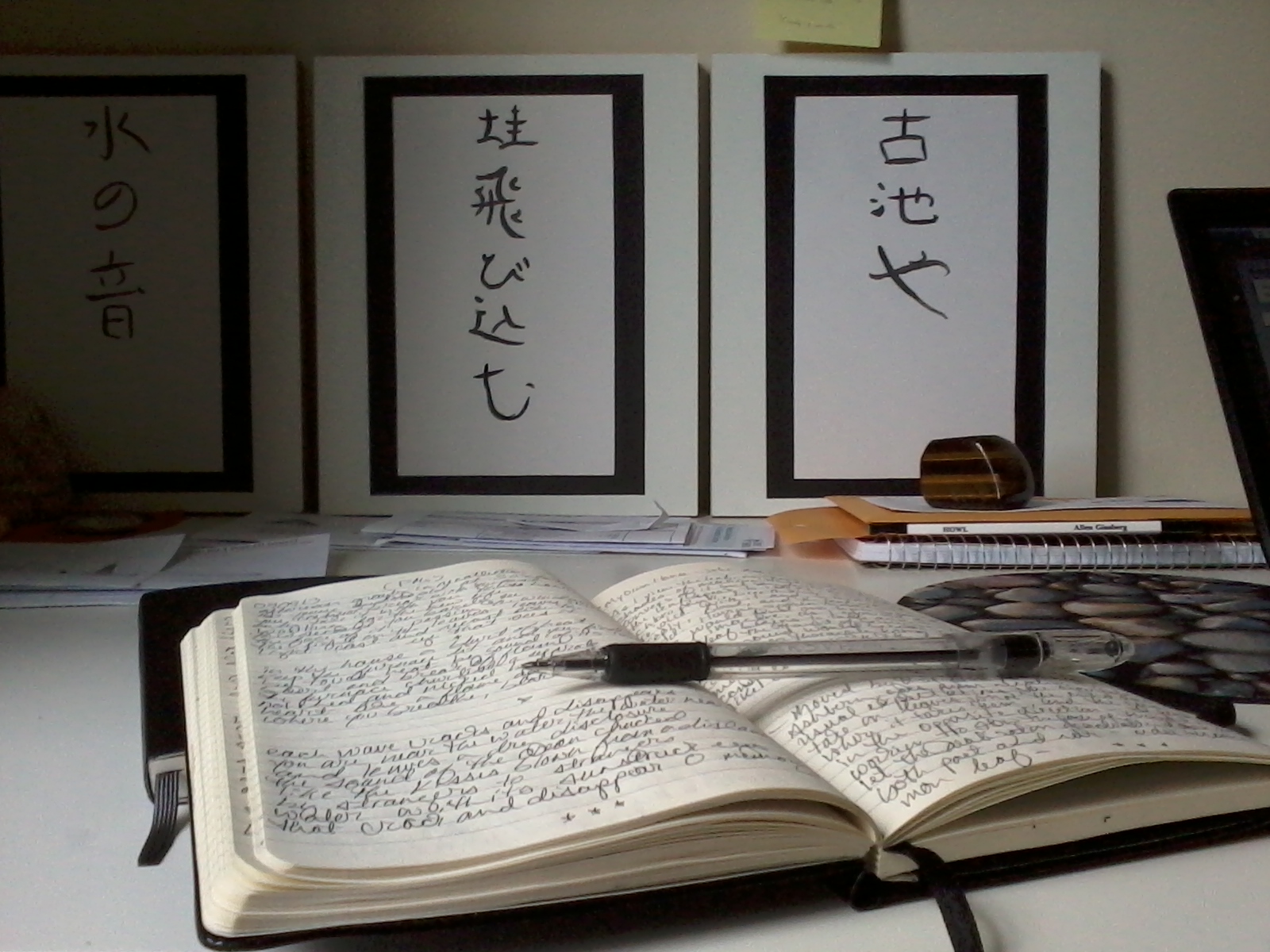
Reading the following poem I realized that it would be interesting – to me, to you, to who? – to periodically share a snapshot of what my writing desk looks like.  With that in mind, here is what it looks like this week:

* hey, I can see my house from here *

* hey, I can see my house from here *

This view is from the surface level – what the page would see if it could do a sit-up.  I’ll try different angles next time.

(Points if you recognize the haiku in the kanji.)

The following poem by David Ignatow moves me in how it goes from negating the usual expectations of looking at leaves – the symbolic view of leaves, what the mind does, where it takes them, what it takes them to mean – and then goes in the opposite direction, the prose working to slow the pace of thought and let the realization gradually dawn on both poet and reader: how man becomes more leaf.

My Own House – David Ignatow

As I view the leaf, my theme is not the shades of meaning that the mind conveys of it but my desire to make the leaf speak to tell me, Chlorophyll, chlorophyll, breathlessly.  I would rejoice with it and, in turn, would reply, Blood, and the leaf would nod.  Having spoken to each other, we would find our topics inexhaustible and imagine, as I grow old and the leaf begins to fade and turn brown, the thought of being buried in the ground would become so familiar to me, so thoroughly known through conversation with the leaf, that my walk among the trees after completing this poem would be like entering my own house.

**

Happy housing!

Jose