* David Ignatow in My Own House

Reading the following poem I realized that it would be interesting – to me, to you, to who? – to periodically share a snapshot of what my writing desk looks like.  With that in mind, here is what it looks like this week:
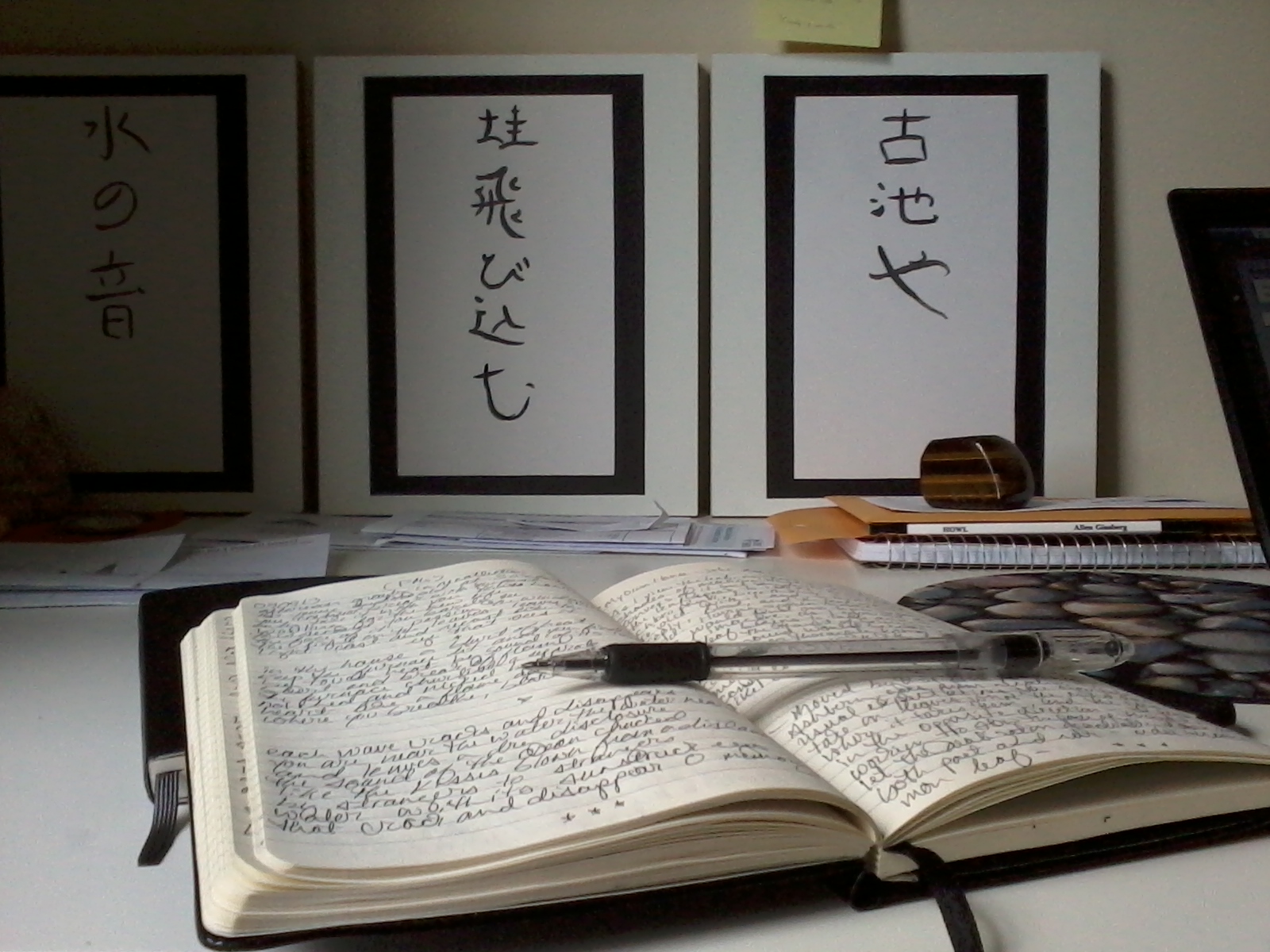
* hey, I can see my house from here *

* hey, I can see my house from here *

This view is from the surface level – what the page would see if it could do a sit-up.  I’ll try different angles next time.

(Points if you recognize the haiku in the kanji.)

The following poem by David Ignatow moves me in how it goes from negating the usual expectations of looking at leaves – the symbolic view of leaves, what the mind does, where it takes them, what it takes them to mean – and then goes in the opposite direction, the prose working to slow the pace of thought and let the realization gradually dawn on both poet and reader: how man becomes more leaf.

My Own House – David Ignatow

As I view the leaf, my theme is not the shades of meaning that the mind conveys of it but my desire to make the leaf speak to tell me, Chlorophyll, chlorophyll, breathlessly.  I would rejoice with it and, in turn, would reply, Blood, and the leaf would nod.  Having spoken to each other, we would find our topics inexhaustible and imagine, as I grow old and the leaf begins to fade and turn brown, the thought of being buried in the ground would become so familiar to me, so thoroughly known through conversation with the leaf, that my walk among the trees after completing this poem would be like entering my own house.

**

Happy housing!

Jose

* summer dancing with Alice Fulton

* Jimmy being told they are out of donuts *

* Jimmy being told they are out of donuts *

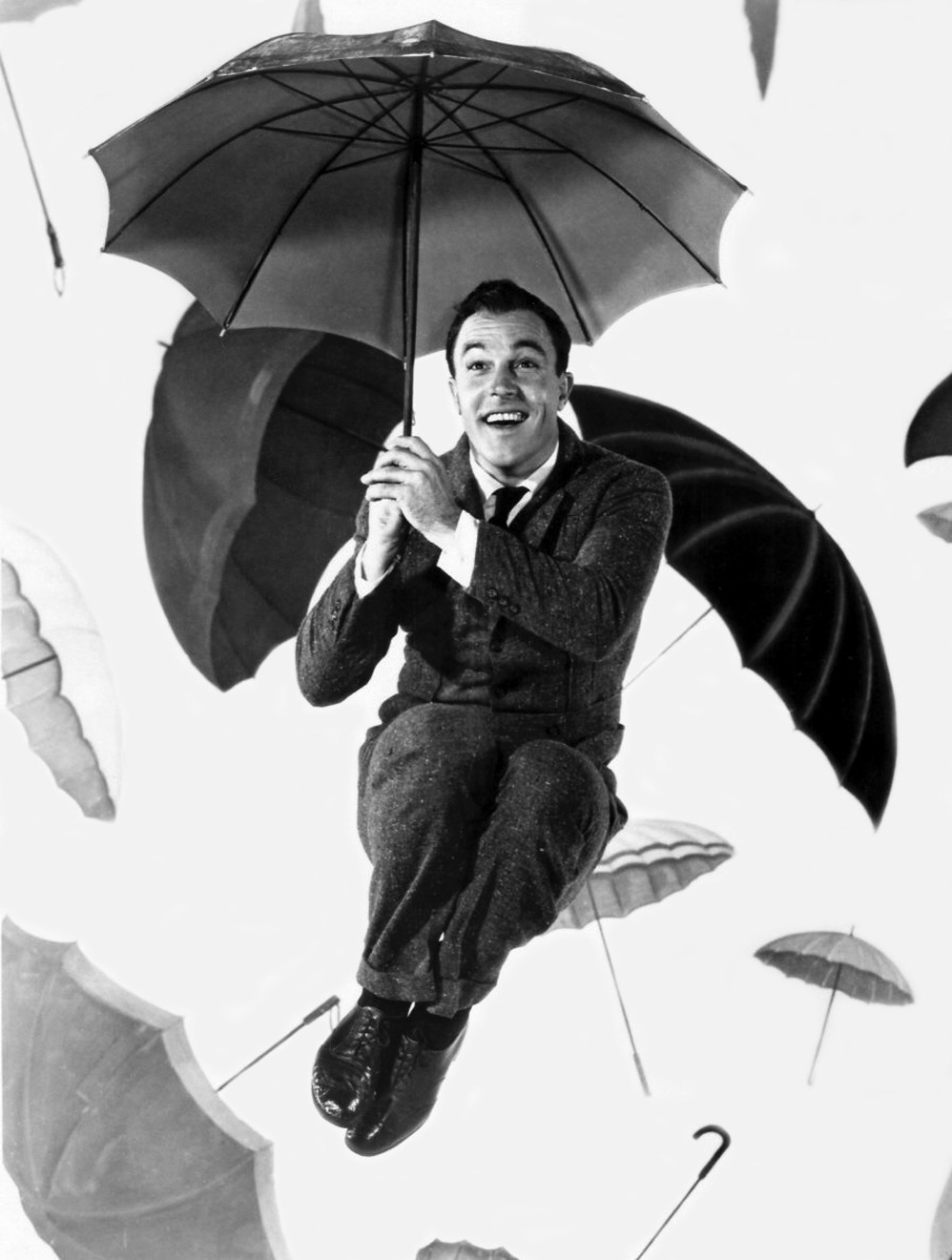
At the start of summer we started an old movie kick sparked by Alfred Hitchcock’s The Man Who Knew Too Much.  James Stewart is a champ in it.

Since then, we’ve done more Hitchcock as well as a few others.  The most surprising was Singin’ in the Rain – straightforward joy and spirit (with a few dance montages out of a really bad acid trip!).

* word to your soft shoe *

* word to your soft shoe *

It made me think of me and Ani’s first summer together.  We took a waltz class with her parents.  Evenings of following each other’s moves and learning something new together made summer feel like spring – in spirit at least.

The waltz became a part of our history that summer.

Alice Fulton’s poem below explores some of the history of the waltz – the real history, what it has meant to people, what all moves between people when they dance.

*

The Orthodox Waltz – Alice Fulton

Courtship, the seamless mesh
under taffeta havocs
of hoop skirt, smoke

hoops from his Lucky Strikes
her words jumped through.
Women dancing had the harder part,

she’d heard, because they must
dance backward.
He kept his ear pressed

like a safecracker’s
stethoscope against
her head, kept his

recombinant endearments
tumbling toward a click.
The lachrymose music,

his clasp and lust-
spiel, displaced her
mother’s proverbs.  How nimble

they were, those girls
gliding by on dollies.
What had her mother said

that sounded wise?  Was it
“Women dancing must be agile
as refugees with jewels

tied to their thighs?”

*

Happy dancing!

Jose