* the 200th post: a cento

Well, it had to happen: we’ve reached the 200th post on this blog!

To celebrate, I decided to create a cento – a patchwork poem made by selecting lines from other people’s poems to create a singular poem (citing one’s sources, of course) – by going through all the posts published since I started this blog and selecting a line from every 10th post.

200 posts = 20 lines!

Eek!
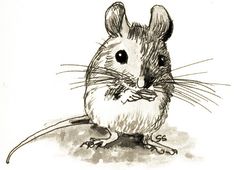
* a mouse *

* a mouse *

Some finer points:

To stick strictly to the every 10th post guideline, I did find myself snatching a snippet or two from a post that had no poem in it. So a “line” was taken from a paragraph or two.

I’m happy to only end up in the piece a handful of times (and with good company, no less 🙂 ).

Also: I had a lot of fun putting this together. Blogging can feel like a mess sometimes, but the accumulative effect is fun. Approaching past posts for the archival potential was inspiring.

And then there’s all you good people who stop by, read, and comment! More than anything, I am humbled by the community this blog has put me in touch with. I started this off as a reader’s blog, and I’m happy to have a forum to share not only my own work but work that illuminates my world and that I hope illuminates yours. Thanks!

Cento for the 200th post

I must learn from the stars
To find out if I might love.
Under these, under our skies.
the colors of my living
will sometimes waft between my lashes
This unwelcome act of reducing
On those nights, the poet can say they tried, and did well.
to fall asleep
“I’m so tired of driving into the sky.”
I would like to step out of my heart
stumble, welcomed each day by
Horses down in the meadow, just a few degrees above snow.
instead of frost, and the tension I felt
selected to be
something imagined, not recalled?
rigid edges and all, and lines still show up
Under a cavernous, a wind-picked sky.
They slept just like the rest of us,
like sunken leaves in a pond,
quoted in the margins

***

Happy quoting!

Jose

p.s. Sources for the Cento:

  1. Evening on the Farm – Bert Meyers
  2. Brown Penny – WB Yeats
  3. Willow – Anna Akhmatova
  4. XIX (from The Wall) – Jose Angel Araguz
  5. An Umbrella from Piccadilly – Jaroslav Seifert
  6. Onions – Jose Angel Araguz
  7. “on poetry readings” TFI post 2/15/13
  8. The Devil on His Wedding Night – Jose Angel Araguz
  9. “from the car: verse & such” TFI post 6/7/13
  10. Lament – Rainer Maria Rilke
  11. “Dog-eared” – Jose Angel Araguz
  12. On the Night of the First Snow, Thinking About Tennessee – Charles Wright
  13. Prosody 101 – Linda Pastan
  14. “quick post: CantoMundo news!” TFI post 3/19/14
  15. Epilogue – Robert Lowell
  16. If They Hand Your Remains to Your Sister in a Chinese Takeout Box — Jamaal May
  17. Sad Steps – Philip Larkin
  18. Going Home – Phoebe Tsang
  19. A Winter Night – Tomas Tranströmer
  20. Evening in Matamoros – Jose Angel Araguz

* Akhmatova & some news on the friday influence

Willow – Anna Akhmatova

 “And a worn-out cluster of trees.”

                                  — Pushkin


In the cool nursery of the young century,

I was born to a patterned tranquility,

The voice of man was not sweet to me,

But the wind’s voice I could understand.

I loved burdocks and nettles,

But the silver willow best of all.

And, obligingly, all my life it lived

With me, and its weeping branches

Fanned my insomnia, with dreams.

But – strangely – I’ve outlived it.

There’s a stump, with strange voices,

Other willows are conversing,

Under these, under our skies.

I’m silent…as if a brother had died.

***

This week on The Friday Influence: the great Russian poet Anna Akhmatova.

Akhmatova lived under the reign of Stalin and consequently had her work censored and condemned by the government.  She is known best for her poems of witness during these times, notably the poem cycle “Requiem”.  I first discovered her work while reading Carolyn Forche’s book “The Country Between Us”.

The poem above was the first poem I came across when I laid her collected poems on a table at a bookstore.  I should point out that her collected is 948 pages long and so the book kinda flopped open to this poem.  There were a few weeks that summer where I repeated this exercise over and over again to sheer illumination.

In “Willow”, I am taken in by the power of the direct address.  There are some poets who send the “you” out in a poem and you can dodge it.  Here, the tone of the poem is such that you feel taken into the confidence of the speaker.  While the speaker does not speak to a “you”, it is felt no less distant.  I guess I could call it an indirect direct address.

Whatever it is, the poem pulses with it, and I read the last line for all its implications of loss.  The worlds traveled here, nature, human, dream – all ring in that last line.

This intimate address makes sense seeing as much of her early work is made up of love poems in this vein:

‘He loved three things, alive:’ *

He loved three things, alive:

White peacocks, songs at eve,

And antique maps of America.

Hated when children cried,

And raspberry jam with tea,

And feminine hysteria.

…And he had married me.

It takes not only nerve to say something like this but to write it, and write it well.

***

While thinking about Akhmatova’s intimate tone, I found myself thinking about the tanka poet Izumi Shikibu.  Something of Akhmatova’s connection with the willow and the heart can be found in this:

Sleeplessly

I watch over

the spring night—

but no amount of guarding

is enough to make it stay.

(Izumi Shikibu) **

***

In other news, my chapbook, The Wall, is officially out from Tiger’s Eye Press.  I am working on a page for this blog with excerpts and ordering information but for now please know info on how to order a copy can be found here:

http://www.tigerseyejournal.com/chapbooks.html

Ok, fine.  I’m excited.

***

Happy exciting!

J

* translated by A.S. Kline here:  http://www.poetryintranslation.com/PITBR/Russian/Akhmatova.htm

** translated by Jane Hirshfield, The Ink Dark Moon (read this!!!)