microreview & interview: Zoom by Susan Lewis

review by José Angel Araguz

susan lewis zoom

In a recent conversation about prose poetry, I found myself tasked with defining what makes a prose poem “poetry” exactly. I fell back on my usual starting point, some riffing on Charles Simic’s idea shared in an interview that “[what] makes them poems is that they are self- contained, and once you read one you have to go back and start reading it again. That’s what a poem does.” What’s great about this quote is that it connects the reading act to the act of rereading, highlighting poetry’s ability to get things said in unique, memorable ways. I say “memorable” here, and feel the need to qualify it as not immediately memorable. That is to say, a phrasing’s distinction comes from the push-pull effect of being familiar enough to make sense, but unique enough to stand out and make us pause.

This movement between familiarity and distinction is one of the driving engines of Susan Lewis’ recent collection, Zoom (The Word Works, 2018). While the collection’s title brings to mind the film technique of zooming in, I find it also applies in terms of speed, in this case, the varying speeds of the reading act. This read on the title is invited, in a way, by the choice of having the individual titles in the collection be the first words of the poems. By having the poem begin with the title, the voice of the poem is engaged from the first words interacted. The opening poem, “Everyone Agreed,” executes this move in a self-revealing way:

Everyone Agreed

this was a thrilling catastrophe. There were the usual photo-ops & spell-checked swoons. Octopeds got the jump on the rest of us, but their webs were useless against the suck. Spare fur was exchanged for sexual favors until the water fermented and all hell broke loose. No one remembered to access their 20:20 hindsight until the razor light blinded us with its odor of inferiority. There was anger and danger beyond our wildest dreams, which stopped coming once the humdrum imploded, divesting us of our history & its discontents.

As I mentioned, having the title be the first words of a poem means the voice is there at the start of the reading act. This move creates an immediacy that propels the reader into the “thrilling catastrophe” of the poetic act. This momentum is then interrupted by Lewis’ choices in diction. The phrasing of “There were the usual photo-ops & spell-checked swoons,” for example, causes a reader to pause; the sentence is structured as a traditional sentence, but the meaning of “spell-checked swoons” causes one to pause and wonder. Yet, the decision to structure this phrase within a prose poem, which builds off the familiarity of the traditional sentence and paragraph, forces the pause to be brief. Were this poem broken into lines, the reader would be given the handhold of line break and stanza break which invite dwelling. Here, the poem marches on through the sense of a paragraph. One reads the rest of the poem propelled by this push-pull effect.

Depending on the reader, one could say that the poems of this collection are read at the mercy of this push-pull effect. Taking this perspective, however, would be to miss out on the rich difficulty available in this lane of poetry, a poetry whose linguistic ambition is to evoke through active sense-making and unmaking. The American tradition of richly difficult poetry runs from Gertrude Stein’s tender buttons to the contemporary lyrically ambitious work J. Michael Martinez. What Lewis adds to the conversation via Zoom is a sequence of poems whose fragmented sensibility become a ride where one catches glimmers of meaning tinged with gloom.

The poem “Dear Sir” continues this work of moving between familiar and distinct phrasing:

Dear Sir

or Madam, until you lose your head, mother its shred, wrapped in mystery & mead. No levity for this, your skid life. No mercy while you bilk your betters, sent flying to spy on your attempts to rise. Across the deep there are many with nary a hook to hang on. & ever & anon those lads with rainbow limbs snaking through the gloom. Another day another dolor. Not to mince woulds, but this sibilance is skilling us. & you who wish upon a stare? Where would you turn & fleetly tumble? The Burning Dervish never knows whereof he’d speak, mute as he is, spinning in his vicious circle, boring his whole through our dank & dappled gaps.

Here, idioms are approached and transformed, refreshed in a way that moves away from the typical reproach one finds in poems. Rather than turn a phrase for some argument or rhetorical stance, the transformation is executed with blunt power. For example, “Another day another dolor” is set as its own sentence, able to color both the previous and following sentence, but also standing as its own moment of distinction. This decision to let the new phrasing stand alone allows the original aphorism “Another day another dollar” to ring like an echo in the reader’s mind. Before one can fully unpack that, however, the prose paragraph structure moves the poem on to “Not to mince woulds, but this sibilance is skilling us,” another set of turns that invite both pause and movement. What is being worked out in this kind of difficulty is a poetry that points elsewhere than itself. The poem’s ending image of a dervish in a trance is telling, evoking a desire for spirituality through activity.

From the sight rhyme of “anger and danger” and the reference to Freud in the phrase “our history & its discontents” (“Everyone Agreed”), to the riffing and subverting of idiomatic phrasing (“Dear Sir”), what these poems offer is an engaged reading act where meaning is only part of the purpose. If narrative poems keep poetry connected to traditions of storytelling, then richly difficult poems like these keep poetry connected to traditions of the lyric voice, that personal, intimate, and engaged perspective whose presence alone gives it purpose and power.

*

Influence Question: What were the origins of this collection?

Susan Lewis: José, thank you so much for your interest in Zoom! The origins of this collection go back to my years-long interest in the prose poem, combined with another interest of mine, which happened to develop at the same time: in poetry as play – which is not, in my mind, inconsistent with addressing dark or serious concerns. One of the things I find interesting is how much play the prose poem allows! I’m drawn to the paradox of this form: poetry that is not lineated, that is, does not advertise itself as poetry. I love the tension this holds – the demand that the reader look beyond the obvious, and engage with what might make poetry be poetry. (A question I think is more important than any particular answer one might suggest). Writing prose poems has only deepened my love for the form: the concentrated punch of a discrete bloc of words floating in a white page; the implication that substantial things come in small packages; the impression these blocs give, of density and compression; the focused attention they ask of the reader.

However, I did not set out, ab initio, to write a book-length project, or suite. It was interesting: after writing some number of what I thought of as free-standing poems, their common concerns started to become apparent, and began guiding the development and features of the rest of the poems in the book. Some of these preoccupations are packed into the title, with its nod towards film technique, as well as velocity. Organized around the substantive and aesthetic potency of point of view, the poems in Zoom borrow from film technique to ‘zoom in’ from the objective/long shot/third person, to the medium shot/second person, to the subjective/close up/first person. All engage the ramifications of subjectivity via bricolage, parataxis, polysemy, and compression. I think of the collection as adding up to a kind of status report for our moment in this world, in which the frame narrows along with the point of view, from the global to the local to the individual. Especially concerned with the need for, and failure of, empathy and decency, as well as with how we perceive and communicate, these poems also amount to a progress report on the state of language itself. The consensus among these poems is that we’re zooming – if not to our doom, than to the brink, where we might still be able to stop ourselves from irreparably despoiling our psyches and our planet.

*

Special thanks to Susan Lewis for participating! To learn more about Lewis’ work, check out her site. Copies of Zoom can be purchased from The Word Works.
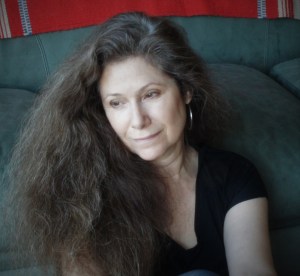
 

SONY DSC*

Susan Lewis (www.susanlewis.net) is the author of Zoom, winner of the Washington Prize, as well as nine other books and chapbooks, including Heisenberg’s Salon and This Visit. Her work has appeared in a number of anthologies, including They Said (Black Lawrence Press, 2018), Resist Much, Obey Little (Dispatches Editions, 2017), and Carrying the Branch (Glass Lyre Press, 2018), as well as in journals such as Agni, Boston Review, The Brooklyn Rail, Web Conjunctions, Diode, Interim, New American Writing, The New Orleans Review, Raritan, Seneca Review, Verse, VOLT, and Verse Daily. She is the founding editor of Posit (www.positjournal.com).

microreview & interview: Stonelight by Sarah McCartt-Jackson

review by José Angel Araguz

stonelight3

In Stonelight, winner of the 2017 Airlie Prize, Sarah McCartt-Jackson adds to the tradition of lyric narrative collections that includes Margaret Atwood’s The Journals of Susanna Moodie and Rita Dove’s Thomas and Beulah, books that take on the materials of human life and through them evoke human presence. Informed by McCartt-Jackson’s background in folk studies, oral history, and naturalism, the poems of Stonelight move individually as statements of intimate experience, but also work together to tell the story of Ora and Eli and their family. One of the main engines behind this poetic storytelling is the use of nature as a lens to understand and feel human interactions.

The opening poem, “Kentucky Rose,” embodies what I mean in its opening lines:

This soil is a vein of stone the company calls blue heron
to indicate its grade—
a bituminous grease in the pleats of eyelines
and thumbnail quick,
in the corners of Eli’s mouth
until everything tastes like the long coal throat of Mine 18,

In these lines, the worlds of nature and human life are blurred in the physicality of Eli’s experience. The arduousness of coal-mining is evoked in the description of the soil working itself down into “eyelines” and “thumbnail quick.” Yet, the inclusion of the name of the soil “blue heron” frames this meeting of worlds. Bringing to mind a blue heron and its grace and flight, the following lines then sink down into Eli’s more grounded experience. This intense sensory experience continues to the poem’s end:

And when the earthhush of that shaft struggles to slip from the blue
shale stitched above the carbon, the sound becomes the rasp
of a carpenter bee’s mandibles boring tunnels
into the porchwood to remove its yellow poplar
grain by grain, gram by spittled gram.

Here, the intensity of Eli’s work is paralleled with a carpenter bee, an image whose focus and drive is as apt as it is startling. The implications here are double: not only is there the drone of the work, but also the feeling of necessity. Both are doing the work necessary for a living. From start to finish, this poem upends any idea that natural life and human life are at odds; rather, they exist as troubled neighbors leaving impressions on each other.

This use of nature as a lens for human understanding and feeling is found again in “Jacob’s Ladder,” which details Ora experiencing a miscarriage. The poem begins:

They say children born on the wrong side
of the river grow wild as fleabane
and do not return until Spring,
their veins all grass stems and cricket legs,

and that wild scuttles straight from their eyes
over the creekbed and slips over the birdfoot violet
into the sandstone,

Here, the world of superstition is brought in, framing what is at stake in childbirth for Ora. The narrative that begins here, that “children born on the wrong side / of the river grow wild,” is developed through nature metaphors of “fleabane” and veins gone “all grass stems and cricket legs.” This metaphoric language evokes directly what is meant by “wild” and what is to be feared. And yet, the narrative continues in the second stanza with the implication that this wildness will affect the land as well. As with “Kentucky Rose,” human intensity is paralleled with nature. Here, however, the parallel serves storytelling directly. Later in the poem, the reader finds out that Ora is unable to make it to the other side of the river:

So her baby’s hands uncurled as bluet and phlox,
her heart a hard walnut, shriveled and shut,
her bloody mouth a kiss on her mother’s thigh.

In these closing images, the experience of miscarriage is translated into nature metaphors. This reads like a natural progression from the opening stanza’s logic. Where what is feared for the child born on the wrong side of the river is expressed as a wildness whose mystery evokes troubled images of land and insects, the mystery that is death is approached through imagery that withholds further understanding. Here, nature represents what shuts out human life and renders it unknowable.

This reckoning with mortality is woven throughout the poems of Stonelight. As the narrative of Eli and Ora plays out in poems whose rich language is stitched with human heart, what remains compelling is how these characters survive and understand their survival. Even as disaster strikes, Ora’s perceptions of the world around her echoes and defies disaster. Seeing her lost children in nature, and through nature seeing herself, Ora is set down as one of poetry’s most compelling characters.

This presence is accomplished through McCartt-Jackson’s ability to braid together poetry, folklore, and research. In “O Death” (below), whose title is borrowed from an Appalachian dirge, McCartt-Jackson goes in the opposite direction of a majority of the poems in the manuscript. Where, as in the poems cited above, human characters are shown to interpret their experiences through the lens of nature, here we have an unnamed speaker evoking Death in a way that renders the experience human, intimate, and ever-present. Despite the contrast in approach, this poem continues the work of expressing the urgency of the world of Stonelight and its characters.

O Death – Sarah McCartt-Jackson

One by one the cicadas clutching the brittle bark turn their spiracles to the light to breathe her in. Their breath leaves ours on the sky-veined insect wings of the world fluttering in the edge of lampglow between umbra and fire. O candle whose light we love even as your wax taper wanes. She rattles but we do not even hear her, ears pressed to the cold cookstove, to the ragged beanvines, to the dog’s frothy tongue. O stone torn from the coalface, time-split and aching, receive her shaking tail of sound into each seam. Overturn each rock, unearth the roly polys and roll their husks between fingers so she will uncoil from the corngrass and lie on a rotting barn beam where moles scurry into her open mouth, and then turn one by one their bodies inside out. O twitching cicada hull hatched one by one with her rattle. O rattle. She sheds a snakeskin rustling on our front porch step, the silent rings in which she has traveled. Our yard, filled with each year of her scaly chaff, hisses like the white undersides of leaves blowing before the flood-rains. Each day we turn our faces to the woods, to the shade curled in a fern’s fiddlehead, to the shade clasped inside a hollow shell. O night, let their antennae burn.

*

Influence Question: How would you say this collection reflects your idea of what poetry is/can be?

Sarah McCartt-Jackson: What excites me most about Stonelight is that this collection combines elements of poetry and fiction. I wrote the book with a narrative arc so that the reader can experience the poems, and the lives inhabiting them, much like experiencing a novel. I was also able to incorporate my background in folk studies, oral history, and naturalism. Throughout the book, readers encounter folk beliefs, words of our ancestors, and a lush environment teeming with flora and fauna. I hope Stonelight guides the reader through the journey with Ora as she experiences her triumphs and tragedies.

Influence Question: What were the challenges in writing these poems and how did you work through them?

Sarah McCartt-Jackson: One of the challenges of writing these poems was creating the narrative arc. I had to outline the book much as an author would outline a novel. When I went to put the poems together, I had to identify plot points that might be missing, then write new poems to help fill these gaps. The narrative arc went through many iterations before settling in its current stream.

Another challenge was the sheer history of the poems. Writing about the turn of the previous century required a lot of research—both historical and personal. I spent a lot of time reading old geology books, government documents, oral histories, and naturalist collections. This research gave me some new, rich language that readers might not immediately recognize, but I insisted on using these terms as they are. Because of that, I tried to help readers along with metaphor and imagery, while also providing extensive notes at the end of the book. In this way, we learn something about history, belief systems, and the folk—the people—that I have created in Stonelight.

*

Special thanks to Sarah McCartt-Jackson for participating! To learn more about McCartt-Jackson’s work, check out her site. Copies of Stonelight can be purchased from Airlie Press.

Also: Be sure to consider entering the Airlie Prize, open now through March!

smj*

Kentucky poet, folklorist, and naturalist Sarah McCartt-Jackson has received honors from and been published by Copper Nickel, Bellingham Review, Indiana Review, Journal of American Folklore, The Maine Review, Tidal Basin Review, and others. She is the recipient of an Al Smith Individual Artist Fellowship from the Kentucky Arts Council, and has served as artist-in-residence for the Great Smoky Mountains National Park and Shotpouch Cabin (Oregon State University). She is the author of Stonelight (Airlie Press), which won the 2017 Airlie Prize, and two chapbooks, Vein of Stone (Porkbelly Press) and Children Born on the Wrong Side of the River (Casey Shay Press), which won the 2015 Mary Ballard Poetry Prize. She works on a farm in Louisville.