writer feature: Saddiq Dzukogi

Book cover for Your Crib, My Qibla.

This week I’m delighted to feature friend and poet Saddiq Dzukogi whose book, Your Crib, My Qibla, is currently available for pre-order from University of Nebraska Press. Here’s a bit about the book:

Your Crib, My Qibla interrogates loss, the death of a child, and a father’s pursuit of language able to articulate grief. In these poems, the language of memory functions as a space of mourning, connecting the dead with the world of the living. Culminating in an imagined dialogue between the father and his deceased daughter in the intricate space of the family, Your Crib, My Qibla explores grief, the fleeting nature of healing, and the constant obsession of memory as a language to reach the dead. (book description by University of Nebraska Press).

I have had the pleasure of knowing Dzukogi over a number of years, sharing correspondence over poems and life. In his work, I have always found a paced, meditative way with the line that develops emotional depth across images that hold for a reader like sunsets: intense, clear, and with a momentum one can feel.

“Wineglass” below is a good example of this. Through intimate narration, the poem develops from its title image into a vessel of its own, holding the speaker’s grief while also moving through the experience of it. Physical details such as “Hands, cloudy from rubbing the grave,” evoke the speaker’s state of mind through the image of cloudiness and emphatic action of rubbing, while the word choice of cloudy/grave parallel the speaker’s desire to mix and be heard across worlds.

Saddiq Dzukogi

Wineglass

When your mother found strands of your hair
hung up in the teeth of your comb,
your father squirreled them into a wineglass.
It bites him hard that your life happened

like an hourglass with only a handful of sand—
this split to the seam of his body, a split
of darkness that won’t kill him but squeezes
adrenaline into his veins, so he lives

through the pain of your absence. He’s not alright
to speak. His voice rims with bereavement,
and he wants to sing by your grave, child,
now that birds blow songs through

the window—counts sadness on the prayer beads
necklaced around his collar. If he had known the sky
would inhale you out of him so quickly,

he would have stayed with your toes forever

in his hands. Your face is still everywhere,
even in the places he is not looking.
He presses a deep kiss on your grave,
on your forehead.

Hands, cloudy from rubbing the grave,
as if on your tender skin.
The distance he feels is more

than the 400 kilometers that often stands
between you. He will travel this far
to hold you against the moon.
They say you are like his reflection

pulled out of the mirror he stares into.
To pull you out he plunges his hand
inside himself and pulls.

*

Your Crib, My Qibla is available for pre-order from University of Nebraska Press.
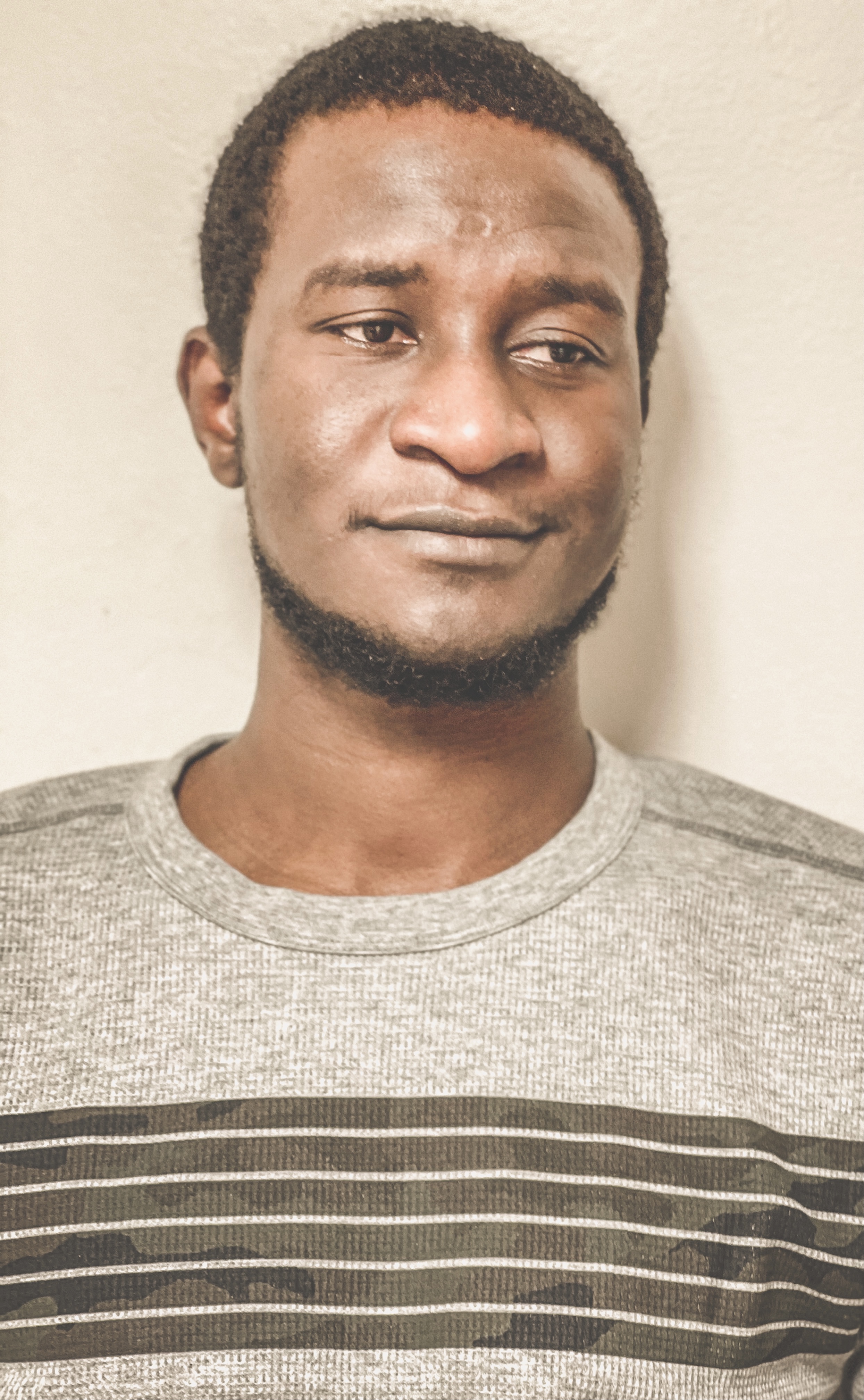
Photograph of Saddiq Dzukogi

Saddiq Dzukogi holds a degree in mass communication from Ahmadu Bello University, Zaria (Nigeria), and is pursuing a PhD in English at the University of Nebraska–Lincoln. A 2017 finalist of the Brunel International African Poetry Prize, he is the author of Inside the Flower Room, selected by Kwame Dawes and Chris Abani for the New Generation African Poets Chapbook series. Dzukogi’s poems have appeared in the Kenyon Review, Prairie Schooner, Gulf Coast, World Literature Today, New Orleans Review, Oxford Poetry, African American Review, Best American Experimental Writing, and elsewhere.

Author’s Twitter: @SaddiqDzukogi
writer feature: Lisa Summe

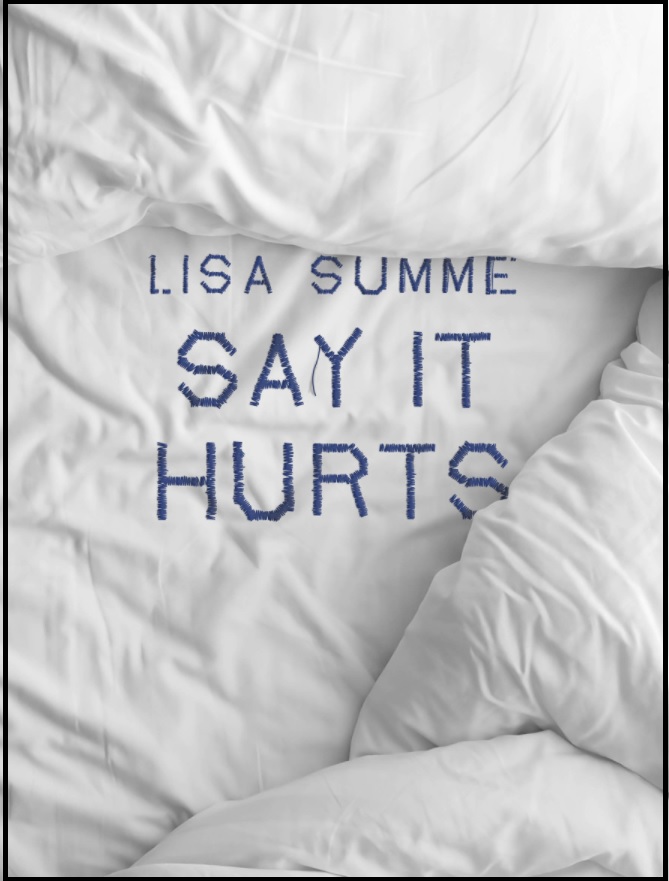
Book cover for Say It Hurts
by Lisa Summe.

This week I’m excited to share two poems from Lisa Summe’s upcoming collection, Say It Hurts (YesYes Books). This collection is due out on January 15th and is currently available for pre-order.

Here’s a brief description of the forthcoming collection:

Say It Hurts grapples with queerness, love, grief, masculinity, coming of age, and coming out in the context of cultural violence rooted in misogyny and familial violence rooted in catholicism. In these poems joy and loss hold hands—at sleepovers and haircuts, at symphonies and haunted mazes, among fathers, on dating apps, during car sex, in matching tattoos, on Pinterest boards, at funerals. Lisa Summe’s debut collection queers the love poem by demanding that the whole story be told—what it means to love, to grieve, and to heal by saying it out loud.

About Say It Hurts

One thing I’m continually impressed by in Lisa Summe’s work is the range of lyric voice she’s able to tap into. From direct intensity to nuanced, meditative insight, there’s always an emotional pulse to her work.

“Always a Man” (below) is an example of direct intensity. The lyric voice charges forth, interrogating the pervasive effects of toxic masculinity in women’s public and private lives. One effect is evoked through the speaker’s stating “I am not the kind of woman,” then using this “not” as a counterpoint to heteronormative examples of “kinds” of women. This reckoning is then forged by the verbal sexual assault women face. Through an example of a hypothetical couple hearing about “sexual assault on the news,” the poem gets to the question: “how many times in a year / do you think you get catcalled.” When this question garners a response “incalculable / like the number of times in a year I stub my toe,” we are as readers hit by a harsh reality. This harsh reality becomes all the more harsh as it occurs within the speaker’s own experience, that the poem has moved from hypothetical example to her referencing “my coworker or sister or best friend.” The poem continues listing various instances of women being catcalled, illuminating the opening line’s counterpoint through indirection. What develops in the first half of the poem is the harsh reality of straight and straight-presenting women in heteronormative society. The poem takes a turn with the line “but there is always a man” which takes us back to the title, its implied binary, and the interrogation via the poem of said binary. The speaker goes from detailing the effects of catcalls to sharing her experience of outright threats of violence. The poem ends on a note that makes clear how insidious misogonynistic subjugation is in women’s lives, queer or straight.

In “Your Pinterest Board Called Wedding” (also below), nuanced, meditative insight is created through the speaker’s reflection as she goes through an inventory of the title’s Pinterest board of an ex. Through this inventory, we get a variety of images and details whose emotional poignancy works through juxtaposition. For example, early on the speaker notes “so / you want an oval engagement ring” and follows that up with “my grief / circling around: coming back as bird.” This braiding of metaphor and image creates a palpable pathos, one that stands in direct contrast with the title. Where the mention of social media and the equally “social” weddings imply connection and celebration, the speaker grieves a loss of connection. There remains, however, a faint tone of celebration, the speaker in awe of the beloved even at a physical and societal distance, but this tone is modulated by grief and realization. The formal use of colons throughout this poem help in this modulation of tone, setting the pace while also letting the reading experience be one of rumination, speaker and reader side by side in awe and regret.

Enjoy the poems below. Also, White Whale Bookstore will be hosting a virtual reading & launch for Say It Hurts on January 23 featuring Summe as well as Sara Watson, Jari Bradley, Micaela Corn, and Diannely Antigua. Check out this link for info on registration and more about the event.


Always a Man*

I am not the kind of woman
whose boyfriend asks
in the midst of all of the sexual assault on the news
how many times in a year
do you think you get catcalled
I do not have a boyfriend first of all
but even if I did my answer would not be
that of my coworker or sister or best friend
incalculable
like the number of times in a year I stub my toe
I am not the kind of woman who looks like a woman
not the kind of woman a man whistles at near the gas station
or calls honey at the bank
or tells to smile because I’ve got a pretty smile
at the farmer’s market
the Jiffy Lube
the coffee shop
the bar down the street
my own porch
because the upstairs neighbor
the mailman
I am not the kind of woman my exes are
women who got hit on right in front me
while I held their hands at the gym or at the movies
or at the fucking Olive Garden
I am not the kind of woman
who has to use her energy to politely decline these advances
or gets called bitch
or gets a bloody lip
or gets it anyway
but there is always a man
while I walk home from work
in a button down & bow tie in broad daylight
there is always a man on the corner by the CVS
a man wearing a hardhat on the corner of Bayard St.
there is always a man
who wants to put me in my place
I see what you really are under there he says
you’re a girl

*previously published in Bone Bouquet


Your Pinterest Board Called Wedding

I swear that’s your actual finger: so
you want an oval engagement ring: my grief
circling around: coming back as a bird:
as a wing: fragile as the inner ear:
my alabaster heart: you: lace
everything: sleeves of your dress: lingerie: twitch
of my thigh: now you will marry a man: I don’t know
his name: twitch in my eye: when we were
together: we made words:  let’s get married: our idea
of save the dates: Scrabble tiles: getting
married: back of your dress wide open: your finch
tattoo bursting through: my grief flying out
the window of you: what you like
about the finch: it always returns home


Say It Hurts is available for pre-order from YesYes Books: https://www.yesyesbooks.com/product-page/say-it-hurts.


Author photo of Lisa Summe.

Lisa Summe is the author of Say It Hurts (YesYes Books, 2021). She earned a BA and MA in literature at the University of Cincinnati, and an MFA in poetry from Virginia Tech. Her poems have appeared or are forthcoming in Bat City Review, Cincinnati Review, Muzzle, Salt Hill, Waxwing, and elsewhere. You can find her running, playing baseball, or eating vegan pastries in Pittsburgh, PA, on Twitter and IG @lisasumme, and at lisasumme.com.