podcast recs

Photo by Anna Tarazevich of Scrabble tiles spelling out “Listen to a podcast.”

Hello again!

Working my way back into this space after summer teaching. Had a blast, always do, but I’ve been going through a lot for a long time, as everyone has. Happy to have a little more flexibility around chipping away at the todo list.

One of the sources of reprieve has been listening to podcasts. Here are some quick recommendations of ones I’ve found inspiring:

  • The Personhood Project: This podcast “looks to connect incarcerated writers to a larger poetry community. Writings in the project culminate in this monthly podcast which explores poetry’s ability to provide the tools necessary to process trauma, lead toward personal growth, and help reduce recidivism in the carceral system.” I became familiar with them through the episode with Chicano poet and friend, Vincent Cooper. In it, the poet and host discuss Cooper’s book Zarzamora (which I did a microreview on) as well as recited poetry written by incarcerated writers inspired by Cooper’s poems. The host even shares the writing prompts during the episode.
  • Poets at Work: Poets at Work “explores topics relevant to contemporary poetry, both in the academy and the wider literary community” with an eye on “insight into how the work of poetry extends beyond what we encounter on the published page.” My introduction to this podcast was the episode featuring  Vanessa Angélica Villarreal. Villareal shares her work and her vast insight into what informs her poetics.
  • Upstream: A bit of a detour from the above, this podcast’s tagline is “Radical ideas and inspiring stories for a just transition to a more beautiful and equitable world” and each episode lives up to that ambition. They split their episodes between “documentary” and “conversation.” I’ve listened to more conversations, I believe, each one a crash course into another aspect of radical economics. One of their most recent episodes, “Our Struggles are Your Struggles: Stories of Indigenous Resistance & Regeneration” is a good start with their documentary vibe.

¡Cuídense!

José
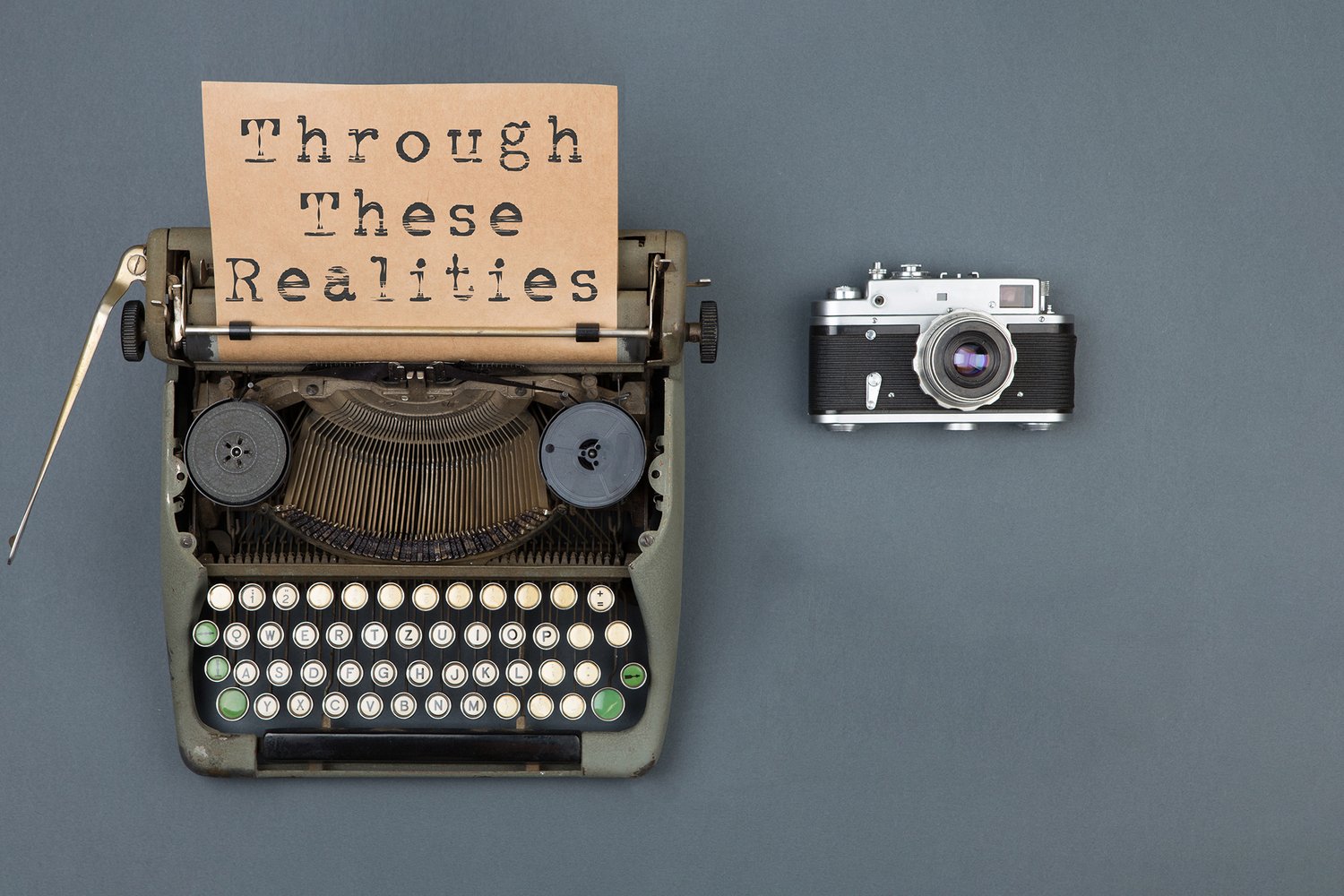
community feature: Through These Realities

This week I’m featuring the local, Boston-area art project, Through These Realities, featuring collaborations across photography and poetry. I shared about the call for this in a previous post, and I’m now happy to celebrate the opening of the exhibition and the publication of the work online.

A typewriter, tape recorder, and camera.

Neuroscientist, photographer, and writer, Joshua Sariñana, PhD, who is one of the coordinators, defines the project as follows:

Through These Realities challenges the narratives of mass media that invalidate the experiences of people of color through the interactions of poetry and photography. Six photographers of color have created a series of images inspired by work from six poets of color. These images incorporate the figurative and literal visual elements related to associated poetry—prompted by a James Baldwin quote. Artists use poetry and photography to validate their realities, reveal the discrepancies between the dominant culture, and solidify the normality of people of color living in the everyday.

A good example of the kind of dynamic work it involved in this project can be seen in the poem “Black Mirror” by Kesper Wang. In this poem, the speaker takes us through different images of contemporary life. A life often centered around smartphones, streaming, and/or at least highly impacted by the internet, but in which folks also strain at turns to be grounded in as well as to find reprieve from the real world.

In this poem, we move through a series of images, teased along by the title, which can be taken at first as a reference to the popular TV show Black Mirror, but which by the end repeats in a way that haunts long after the last line’s been read.

This kind of engaged reflection and meditation on the ills of the world–not just to lament but also to explore the depths of feeling that we are taken to at times–speaks to the prompt defined by Sariñana, and by doing so gives insight into the realities in the title of this project.

If you’re in the area, details of the in-person exhibition can be found on the TTR website. Even if you’re not in the area or are practicing social distancing, I encourage you to spend time with the work online.